
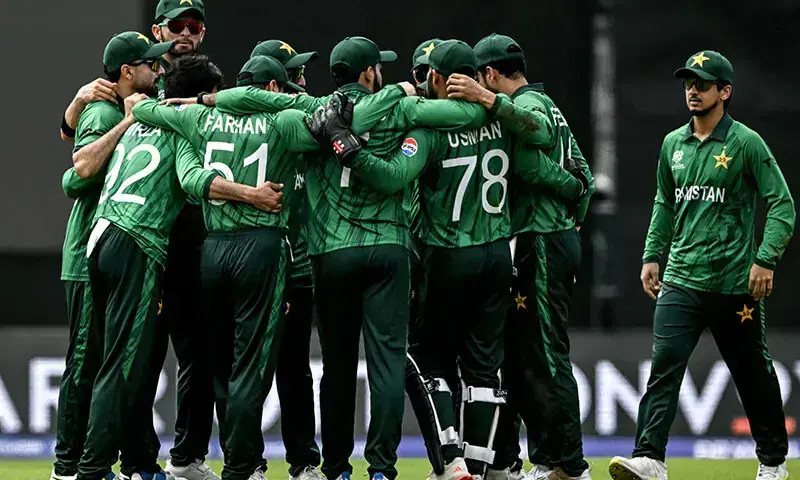
In international cricket, gestures of principle often dominate headlines. Strategy, by contrast, tends to unfold more quietly. Pakistan’s decision to go ahead with its February 15 T20 World Cup match against India fits more into the latter category, reflecting a calculation shaped by financial, diplomatic and competitive realities.
The initial announcement of a boycott achieved its immediate objective. It drew attention to Bangladesh’s dispute with the International Cricket Council (ICC) and India, and it placed Pakistan in visible solidarity with a board that commands less financial and political leverage within the global cricket structure.
That alignment may be temporary, but in a system where Pakistan frequently finds itself on the margins of decision-making, even short-term support carries weight. By backing Bangladesh, the Pakistan Cricket Board (PCB) positioned itself within a broader debate about governance, scheduling and the distribution of influence among cricket’s member boards.
The episode also amplified discussion around structural imbalances in world cricket. Smaller and mid-tier boards have long voiced concerns about revenue distribution and administrative authority, particularly in relation to the Board of Control for Cricket in India (BCCI) and its economic dominance.
Yet symbolic gestures do not resolve structural constraints. For the PCB, financial sustainability remains a pressing consideration. A prolonged boycott would have carried consequences that extended beyond political messaging.
Had Pakistan forfeited the match, it would have lost both competition points and a share of associated revenue. While the competitive impact might have been limited given Pakistan’s recent record against India in the T20 format, the financial implications were more significant.
In 16 T20 meetings between the two sides, India have won 13 times, with Pakistan securing three victories. The more substantial concern was the economic dimension. Matches between India and Pakistan are among the most commercially valuable fixtures in global cricket.
Under the current revenue-sharing model, India receives 38.5 per cent of the ICC’s central revenue distribution, a figure larger than the combined allocation of the next six boards. Pakistan’s share is estimated at roughly five to six per cent. The disparity reflects the size of the Indian broadcast market, which underpins ICC media rights agreements worth billions of dollars over each cycle.
The Indian Premier League and bilateral series ensure that the BCCI’s income is not dependent on ICC distributions to the same extent as other boards. For Pakistan and many others, however, ICC revenue forms a substantial portion of annual budgets. Any disruption to marquee fixtures would therefore carry asymmetric consequences.
India–Pakistan matches are routinely scheduled in ICC tournaments because they generate significant broadcast interest. Industry estimates suggest that a single contest between the two can account for 20 to 30 per cent of a tournament’s overall broadcast value. While such a match may not materially affect India’s cricket economy, it contributes to the broader financial ecosystem that sustains boards such as Pakistan’s.
Agreeing to play the match therefore mitigates the risk of revenue loss and protects Pakistan’s share of ICC distributions. It also reduces the likelihood of straining relations with other member boards that had urged a resolution.
Sri Lanka and the United Arab Emirates were among those that encouraged Pakistan to reconsider its stance. Both countries have served as neutral venues for Pakistan in recent years and remain important logistical and political partners within ICC structures. Maintaining cooperative relationships with such boards has practical value.
The ICC itself has, in recent cycles, adopted arrangements accommodating Pakistan’s position on playing in India by implementing hybrid hosting models. Escalating the dispute further could have complicated future negotiations, particularly given Pakistan’s relatively limited financial leverage within the global framework.
The broader context underscores the constraints facing the PCB. The ICC’s governance structure reflects economic realities, with India’s market influence shaping commercial agreements and administrative direction. Altering that balance would require sustained strategic engagement rather than short-term confrontation.
Boycotts can signal dissent, but their effectiveness depends on leverage. At present, Pakistan does not command the commercial weight or on-field dominance necessary to force systemic change unilaterally. This does not preclude advocacy, but it necessitates prioritisation.
By announcing a boycott and then reversing course after consultations, the PCB demonstrated both resistance and pragmatism. It raised concerns about governance and solidarity with Bangladesh, while ultimately safeguarding competitive and financial interests.
In a sport increasingly shaped by commercial considerations and diplomatic negotiation, that balance carries significance. The decision to play India may not resolve deeper structural debates within cricket, but it preserves Pakistan’s position within the existing system while keeping channels of influence open.
The February 15 match will proceed within that framework. Beyond the immediate contest, the episode reflects the interplay between principle and practicality in contemporary international cricket.