
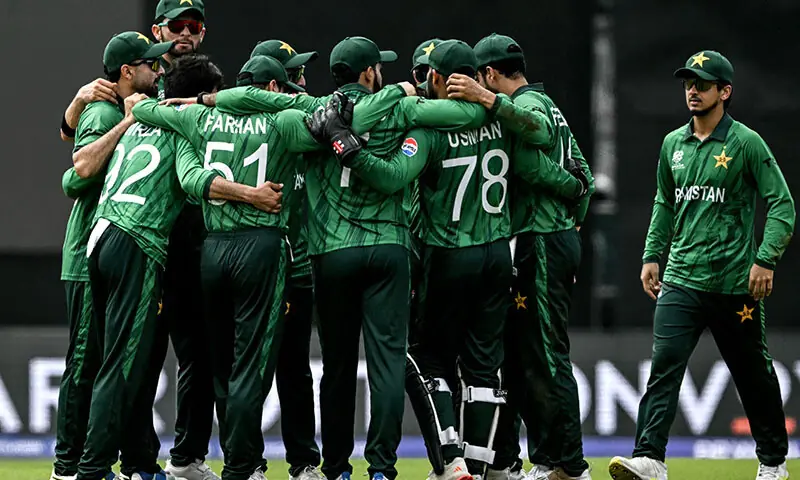
Pakistan’s decision to play its scheduled ICC Men’s T20 World Cup match against India on February 15 has drawn widespread reaction from governments, cricket boards, former players and commentators, ending days of uncertainty over one of the tournament’s most high-profile fixtures.
The government confirmed on Monday that Pakistan would take the field against India in Colombo, reversing an earlier decision to boycott the match in solidarity with Bangladesh. Bangladesh had been excluded from the tournament after refusing to play its fixtures in India over security concerns, a move that escalated into a broader dispute involving the International Cricket Council (ICC) and several member boards.
The decision followed the arrival of an ICC delegation in Pakistan over the weekend, which held meetings with Pakistan Cricket Board (PCB) Chairman Mohsin Naqvi. It also came after diplomatic engagement from Sri Lanka, a co-host of the tournament, and consultations involving the Bangladesh Cricket Board (BCB).
In a statement on social media, Sri Lanka’s Foreign Minister Vijitha Herath thanked Prime Minister Shehbaz Sharif, Pakistan’s government and the Foreign Office for agreeing to Sri Lanka’s request to proceed with the match. He said the decision reflected sportsmanship, friendship and strong bilateral ties, and also acknowledged the role of the PCB and Pakistan’s sports authorities.
Sri Lankan President Anura Kumara Dissanayake, who had spoken with Shehbaz earlier in the day, expressed satisfaction with the outcome and thanked the Pakistani prime minister for ensuring the continuation of the tournament. Sri Lanka had raised concerns that a boycott of the India–Pakistan match would affect not only the competition but also tourism and commercial activity linked to the event.
Commentators and journalists described the decision as extending beyond sport. Pakistani journalist Faizan Lakhani said the public gratitude expressed by a foreign head of state for a match not involving his own team highlighted the broader diplomatic stakes. He said the episode underlined Pakistan’s importance in world cricket and showed that government-level intervention was required to resolve the standoff.
Former Pakistan captain Shahid Afridi welcomed the move, saying the spirit of cricket had prevailed. He said the decision protected the sanctity of the World Cup and ensured stability for the global game, adding that cricket continued to play a role in bridging divides.
Former England captain Michael Vaughan described Pakistan’s participation as positive for both the competition and the sport. He also expressed hope that India and Pakistan could eventually resume Test cricket, suggesting the United Kingdom as a possible neutral venue.
Indian commentator Harsha Bhogle said Pakistan’s decision to play had been inevitable, adding that withdrawal had never appeared realistic. Veteran Indian journalist Pradeep Magazine told AFP that financial considerations would have played a role, noting that India–Pakistan matches generate significant revenue beyond cricket itself.
“Losing an India–Pakistan match would have been a loss for all ICC member nations,” he said, adding separately that while India was a major economic driver in cricket, the sport required competitive opponents and could not exist in isolation.
Former India cricketer Madan Lal said Pakistan’s repeated statements about boycotting the match had pressured the ICC into sending officials to Islamabad to resolve the issue. He said strong teams were essential to preserving the appeal of the World Cup.
The government statement issued on Monday outlined the process behind the decision. Officials said Prime Minister Shehbaz Sharif was formally briefed by Naqvi on the outcome of discussions involving the PCB, ICC representatives and the BCB.
The statement said Pakistan reviewed formal requests from the BCB, along with communications from Sri Lanka, the United Arab Emirates and other ICC member nations, which urged Pakistan to help secure a solution. It added that Shehbaz also took note of remarks by BCB President Aminul Islam, who had expressed gratitude for Pakistan’s support.
Pakistan reaffirmed that it stood “shoulder to shoulder” with Bangladesh, the statement said, but added that the decision to play India was taken after multilateral consultations and appeals from friendly countries. The government formally directed the national team to play the February 15 fixture, saying the move was intended to protect the spirit of cricket and ensure the continuity of the global sport.
Information Minister Attaullah Tarar welcomed the announcement, saying the nation stood behind the team and praising the role of the prime minister and the PCB leadership.
Sri Lanka’s president later reiterated his thanks, recalling that Pakistan and India had supported Sri Lankan cricket during the 1996 World Cup, when teams played in Colombo despite security concerns. He said he was pleased that the match would proceed as planned.
Earlier, Dissanayake had urged Shehbaz to resolve the impasse, citing Pakistan’s past tours of Sri Lanka during periods of terrorism and Sri Lanka’s own support for cricket in Pakistan in difficult times. Shehbaz said he would convey a final decision after consultations, which were later concluded in favour of playing the match.
Bangladesh also welcomed the outcome. In a statement shared by state broadcaster PTV, the BCB thanked the PCB and ICC for their efforts to overcome recent challenges. Aminul Islam said Bangladesh was deeply moved by Pakistan’s support and formally requested Pakistan to play the match for the benefit of the wider cricket ecosystem.
Separately, the ICC announced that it would not impose any financial, sporting or administrative penalty on Bangladesh for opting out of the tournament. The governing body said it had concluded open and constructive dialogue with the PCB and BCB, stressing that discussions extended beyond the immediate tournament to the broader future of cricket in South Asia.
The ICC reaffirmed Bangladesh’s status as a full member and said its absence from the tournament, while regrettable, would not have long-term consequences. It also said Bangladesh would host an ICC event before the 2031 Men’s Cricket World Cup, subject to standard procedures.
ICC Chief Executive Sanjog Gupta said Bangladesh remained a priority cricketing nation and that the ICC’s approach was guided by neutrality and support rather than punishment.
Pakistan had earlier agreed to take part in the 2026 T20 World Cup but said it would not play India after Bangladesh was replaced by Scotland following its refusal to tour India amid strained relations. Sri Lanka Cricket had warned that a boycott would cause financial losses and harm tourism.
Pakistan and India have not played bilateral cricket for more than a decade and now meet only in global or regional tournaments, making the February 15 match one of the most closely watched fixtures of the World Cup.