
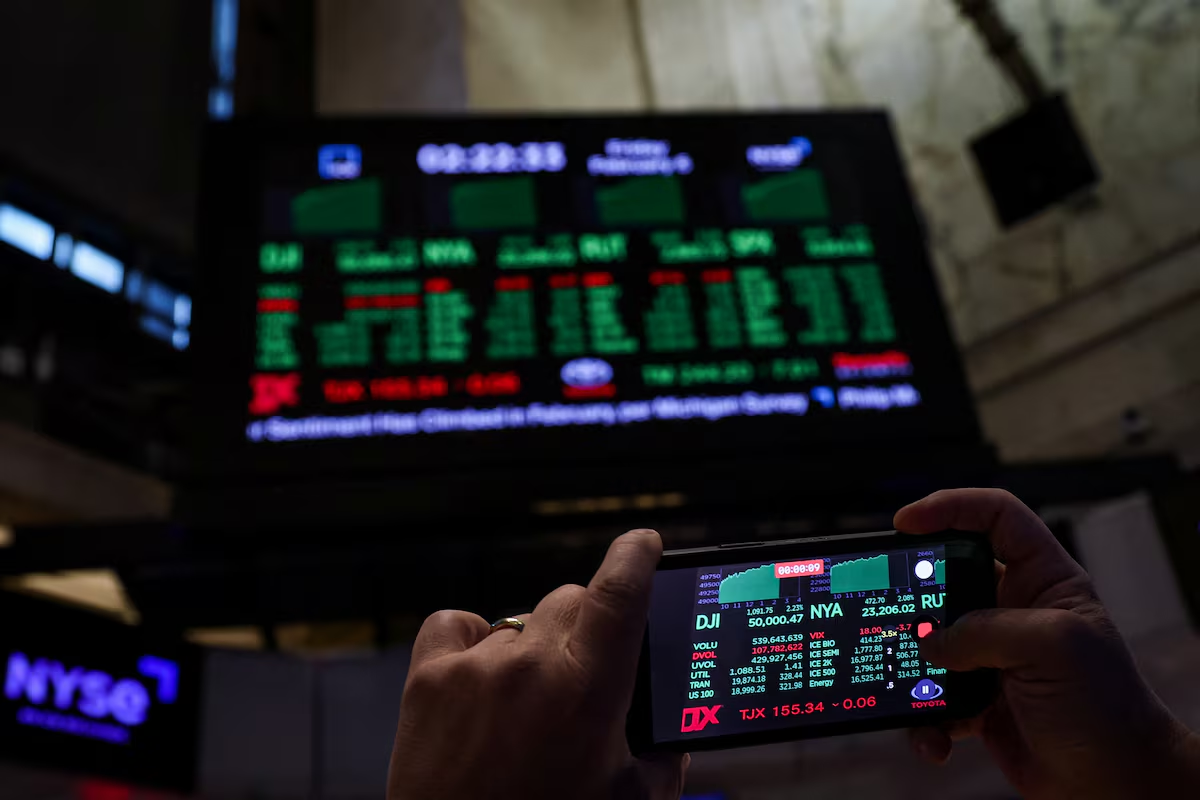
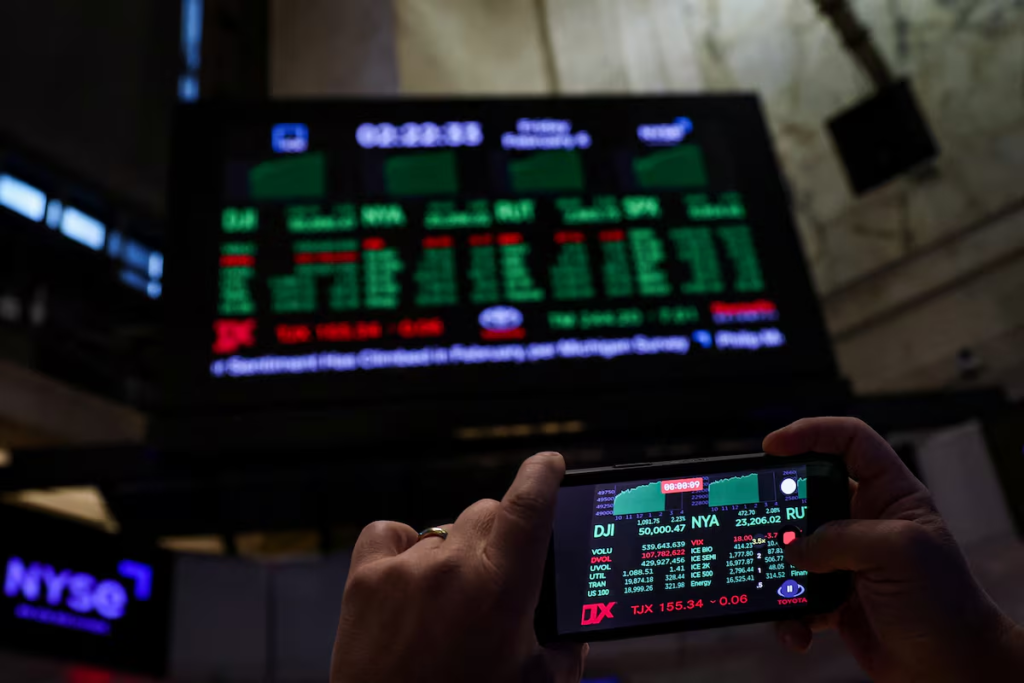
Global equity markets rose on Monday, recovering from a volatile previous week as a rebound in US semiconductor stocks and other heavily sold assets lifted investor sentiment, while Japanese shares climbed to record highs following a decisive election victory for Prime Minister Sanae Takaichi.
Markets drew support from bargain hunting in sectors that had come under pressure last week, including technology stocks, silver and cryptocurrencies. Expectations that the US Federal Reserve could begin cutting interest rates by mid-year also helped underpin risk appetite, even as concerns lingered over the scale of spending tied to artificial intelligence and its eventual returns.
In Asia, Japan led gains after the ruling Liberal Democratic Party secured a strong mandate in elections over the weekend. The result boosted confidence that the government would be able to pursue fiscal measures, including higher spending and tax cuts, clearing a major source of political uncertainty for investors. Japan’s benchmark Nikkei 225 jumped 3.9%, reaching an all-time high.
The Japanese yen strengthened broadly, most notably against the US dollar, which had recovered much of its losses from a sharp slide in late January. Analysts said the election outcome had brought clarity to policy direction, though constraints remained. Sree Kochugovindan, senior research economist at Aberdeen, said investors would focus closely on the scale of fiscal expansion, particularly proposals for a temporary food tax cut announced during the campaign. She noted that despite the landslide result, the government remained mindful of bond market sensitivities.
The prospect of increased borrowing pushed Japanese government bond yields higher, with two-year yields rising to around 1.3%, their highest level since 1996, according to market data.
In Europe, shares also edged higher, tracking gains in Asia and Wall Street’s late-week rebound. The pan-European STOXX 600 rose about 0.2%, moving closer to record levels. Futures on the S&P 500 and Nasdaq Composite were largely flat after both benchmarks bounced more than 2% on Friday, snapping a run of heavy losses.
US equities had found support late last week as investors returned to technology and chip stocks, which had been hit hard amid worries over stretched valuations and the pace of AI-related capital spending. The Dow Jones Industrial Average crossed the 50,000-point mark for the first time on Friday, rising nearly 2.5%, a milestone that underscored the scale of the recent recovery.
Despite the rebound, some caution remained. Investors continued to question whether the large sums being poured into artificial intelligence would deliver sufficient returns. The four largest US technology companies alone are expected to spend around $650 billion on capital expenditure this year, according to analysts’ estimates.
Attention is now turning to a heavy slate of US economic data due later this week, which is expected to shape expectations around monetary policy. Reports on employment, inflation and consumer spending are scheduled for release, and investors said the figures would need to strike a balance: strong enough to avoid undermining earnings and demand, but not so robust as to rule out interest rate cuts.
Market pricing suggests a rate cut by June is increasingly seen as likely. That view was reinforced by easing dollar sentiment, with the currency slipping slightly against a basket of peers. The dollar fell about 0.45% against the yen to around 156.57, while the euro rose 0.4% to roughly $1.1865.
A Bloomberg News report, citing unnamed sources, that China had urged its banks to curb exposure to US Treasury bonds also weighed modestly on the dollar and nudged Treasury yields higher.
In the UK, sterling weakened against the euro as political uncertainty increased around Prime Minister Keir Starmer. The euro rose about 0.5% against the pound to around 87.22 pence. Ruth Gregory, deputy chief UK economist at Capital Economics, said any leadership change could initially push gilt yields higher and weaken the pound, with longer-term effects likely tied to looser fiscal policy.
Commodity markets steadied after sharp swings last week. Silver rose about 4.5% to $81.44 an ounce after seesawing from a 15% loss to a 9% gain on Friday, while gold climbed 1.1% to around $5,015 an ounce, recovering from last week’s low near $4,403.
Analysts said the combination of stabilising markets, expectations of policy easing and reduced political uncertainty in key regions had helped calm nerves, but warned that upcoming economic data and policy signals would be critical in determining whether the rebound could be sustained.